People Are Not Numbers: USF’s Message to Commissioner Serafin
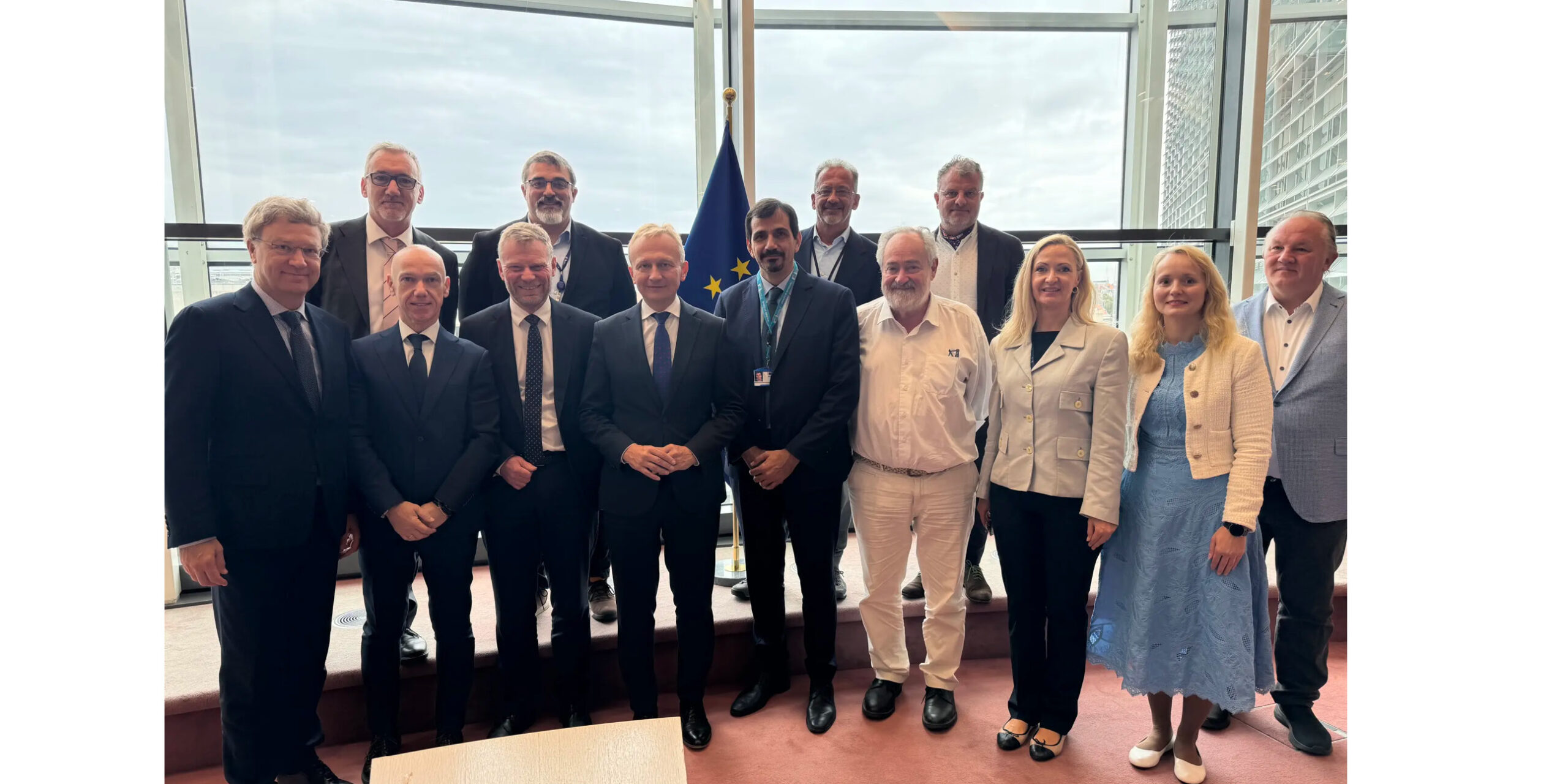
On 28 September, USF participated in a meeting with Commissioner Serafin and staff representatives to discuss the recommendations from DG HR’s large-scale review (LSR) workstreams.
USF had a chance to express its deep concern about some recommendations, such as the precarity-on-steroids of a three-year double-probation starting contract, the centralisation of services as a purely accounting exercise, and the lack of active involvement of Staff Representation in the process.
USF sees the recommended new recruitment method as toxic, as it gives no consideration to prior experience, let alone experience in the European Public Service. The centralisation of services, if not taking into account the specificity of the human and service needs they fulfil, will lead to a worse place of work. Finally, consulting Staff Representation as a tick-box exercise means that errors from the past are being put forward as innovative ideas.
The chair of the Central Staff Committee and representatives from all the Trade Unions composed the delegation of staff representatives.
You can find USF’s intervention here below:
Mr Commissioner,
I thank you for meeting with us to discuss the recommendations of the large-scale review workstreams. At first sight, good ideas are plenty, but so are the bad ones; a couple of contradictions exist, and there are worrying omissions.
Concerning structures, the expression breaking the silos is unfortunate in how it gets twisted from breaking the silo mentality. As anyone in farming or the energy industry knows, there is nothing wrong with having silos: they have the critical task of storing something essential while you don’t need it, so that it is available when you do. Focusing too hard on the structure, without first defining how you’ll access what it contains in times of need, can be very counterproductive.
The way the Commission succeeded under the recent crises shows that the essential goods are there; it is getting access to them that is tricky. So much is hinted at by more than one workstream. This would suggest that the Commission does not have a silo problem; it has a silo mentality problem. Since it is not mentioned in the report, allow me to explain. The lack of the one-Commission mentality the purpose and values team rightly identifies is due to competition between services imposed top-down. From competition for resources to managers with frail egos competing for visibility in the press.
But even where some rearrangements look logical, one needs to be careful in how they approach it. Roughly 20% of the Commission staff do not work in Brussels. The idea of a Brussels-centric approach to centralisation of services that is disconnected from local realities such as healthcare, the housing market, schooling and childcare, local providers, etc., risks having a large impact not only on the attractiveness of the Commission as an employer, but also on current staff. Unlike what is mentioned in the recommendations, the reality of the services both PMO and DIGIT provide to non-Brussels Commission seats tells a dark story of at times increased administrative burden and lack of proper working tools.
And how can over 100 derogations to opt-outs and own rules, that turn agencies into analogues of independent kingdoms, be centralised or clustered in a human-centric and not purely accounting manner? Wouldn’t the economies of scale be larger if we moved from a world where institutions and agencies “largely comply with the staff regulations”, to one where they fully comply? Just think if you’d eat in a restaurant that advertised itself as largely following the hygiene code.
As the workstream on deprioritization says, strategy is deciding what not to do. That is why the decision on collaboration needs to be considered before any metaphorical breaking of the silos. Too much flexibility leads to a spineless Commission, and the saying that cannibals hate spines comes to mind! It will be the collaborative Commission that will highlight the structures it needs, and which it doesn’t.
That is why another change of mindset is needed, but absent from the recommendations. The relationship between Commission departments, under the one-Commission principle, must stop being one of provider-client. These relationships not only do not nurture a collaborative mindset, but they also tend to become abusive in the long run. By intrinsically lacking trust, they also get burdened with extra layers of control. And people involved refrain from coming forward with suggestions to improve ways of working. And instead of having a dynamic continuous improvement environment, we have a heavily controlled, rigid and risk-averse one.
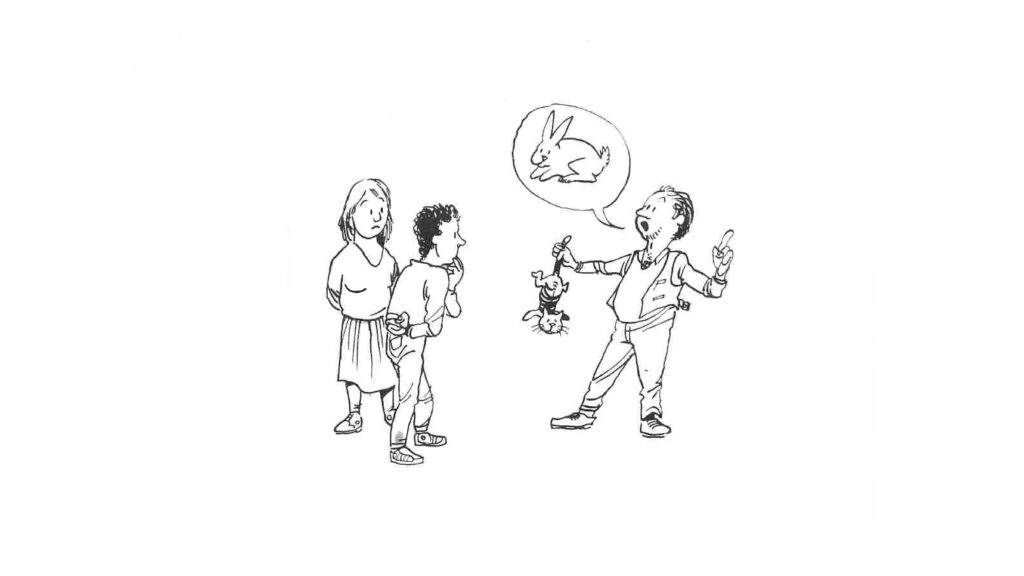
Finally, let’s talk about people. People are not numbers. Unfortunately, there are many recommendations that make me need to say this. People are rarely being seen as people.
This is not surprising, considering that the one stakeholder which intrinsically looks at staff as people was placed on the sidelines of the sidelines. I talk, aware of the irony of saying it in this meeting, of course of staff representatives.
The lack of historical knowledge is there. More than one workstream proposes fast-track careers as a panacea to motivate all types of behaviour, in a process that resembles ignorance of the promotion system. And what to say about the proposed recruitment model other than precarity on steroids? A double probationary period extending up to three years, which plays against non-Brussels seats and remains ignoring previous experience acquired in the institutions, only serves the purpose of more easily disposing of people. And to say this helps in filling posts for the managers of tomorrow leans too closely to hints of favouritism in recruitment.
The collaboration workstream defines the need to move away from a track-changes mentality to co-ownership from the start. Staff representatives were treated for the large part of the exercise, and especially at the meeting of the 11th of July, as a box-ticking exercise. There are roughly 7 different data sources referred to in the document that we got no access to. Moving forward, the best we are being given is a chance to track changes. While we’ll take it, one could also argue that the Commission would do well by following not only some of the suggestions already received, but also their own prescriptions in the Quality Jobs Roadmap, by creating and maintaining quality jobs across European public service, ensuring fairness and modernisation in the workplace, and strengthening social dialogue and collective bargaining. That would be something not seen in the past 30 years, which would uphold our values and strengthen our social model.